What Bayer’s $2.2 Billion Investment Could Mean for Central Ohio’s Industrial Real Estate Market
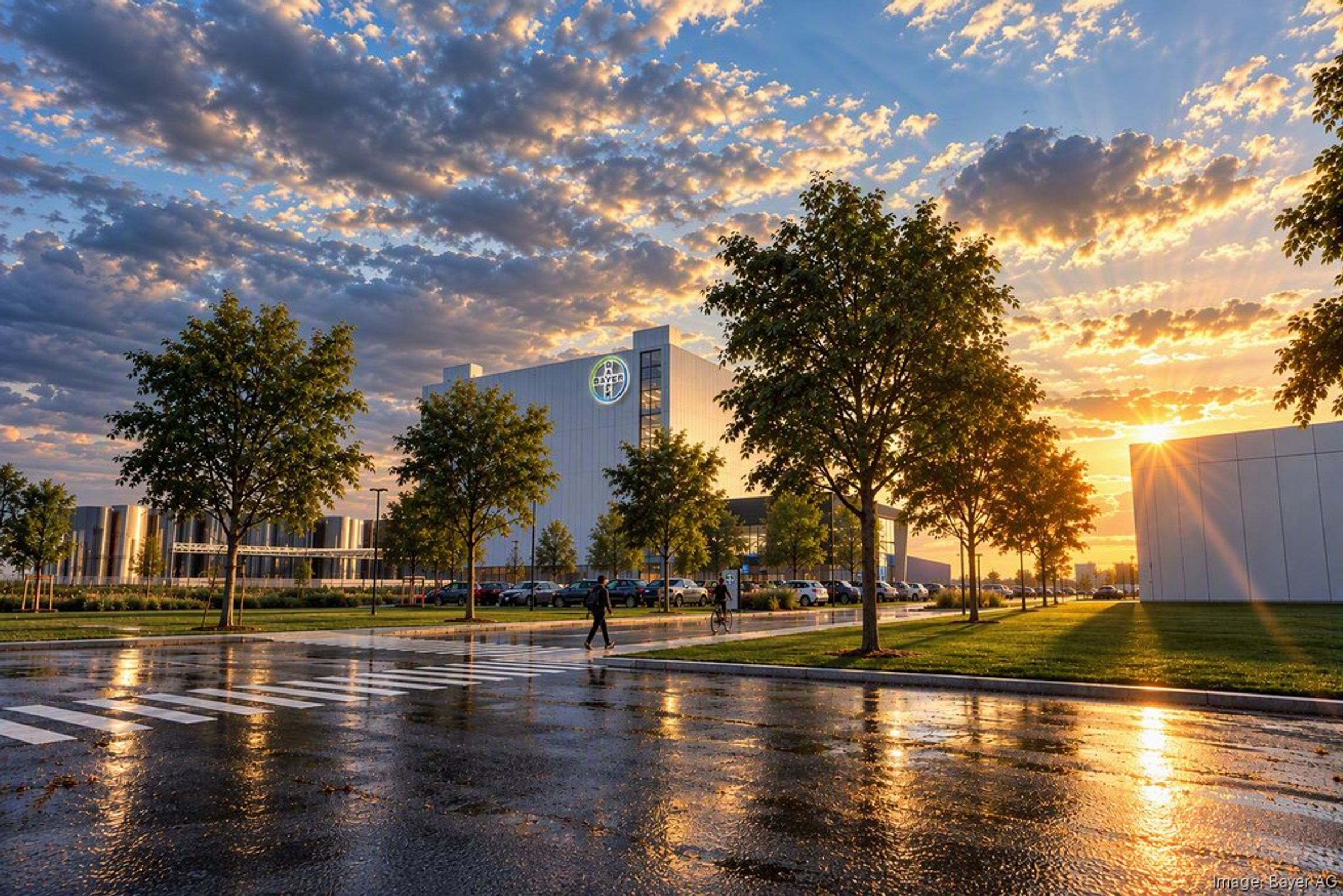
Global pharmaceutical company Bayer AG has announced plans to invest $2.2 billion in a new manufacturing facility in New Albany, further expanding Central Ohio's growing life sciences and biomanufacturing sector.
The facility will be developed in two phases. The first, expected to begin operations in 2031, will manufacture active pharmaceutical ingredients. A second phase, scheduled for 2034, will produce finished prescription medications, including treatments for cancer, heart failure and kidney disease. The investment is expected to create 600 skilled jobs with salaries exceeding $100,000.
Bayer cited the region's commitment to workforce development, including the new Ohio Life Sciences Training Center in New Albany, along with proximity to leading healthcare and research institutions, an established life sciences workforce and a collaborative business environment as key factors in its decision.
The announcement builds on New Albany's growing concentration of advanced manufacturing and biotechnology companies, strengthening the region's position to attract additional investment and supporting businesses.
We spoke with NAI Ohio Equities' Executive Vice President Matthew Osowski about what Bayer's investment could mean for Central Ohio's industrial real estate market, from demand for industrial sites and specialized facilities to opportunities for supporting businesses and future development.
1. What does Bayer's decision to invest $2.2 billion in New Albany signal about the region's competitiveness for advanced manufacturing and life sciences investment?
Matthew Osowski: Bayer's decision reinforces the momentum we're seeing in advanced manufacturing, particularly biotechnology and life sciences, which I expect to be a major driver of Central Ohio's industrial market heading into 2027.
Combined with other recent megaproject announcements, this investment has firmly placed Central Ohio on the radar of site selectors worldwide. But what continues to distinguish our region are its fundamentals: a growing population, central location and access to talent from top-ranked universities.
2. How could Bayer's investment influence industrial land values, development activity and demand for available sites in New Albany and surrounding submarkets, both in the near term and over the longer term?
Matthew Osowski: New Albany remains one of Central Ohio's tightest and most competitive submarkets, with land values influenced more heavily by surrounding data center development than any single manufacturing project. While Bayer's announcement further validates the region as a shortlist market for major investments, I expect its impact on land values to be gradual rather than dramatic.
Construction and site preparation (now through 2031): We anticipate increased interest from developers and land investors looking to position themselves near the campus. Property owners will likely hold firm on pricing, particularly for sites with utilities and entitlements already in place. In the near term, the greatest impact will be increased attention rather than significant land absorption.
Operational launch (2031): As suppliers and supporting businesses begin establishing specific space requirements, development activity should accelerate. With available land in New Albany becoming increasingly limited, some of that demand will likely shift into adjacent submarkets.
Longer term (2034 and beyond): As the second phase becomes operational and the life sciences cluster continues to mature, sustained demand should support land values and development activity throughout the broader eastern corridor and Licking County.
3. Major manufacturing investments often attract suppliers and supporting businesses. What types of companies could follow Bayer to Central Ohio, and what kinds of industrial space would they require?
Matthew Osowski: Initially, we'll see increased demand from contractors supporting construction, including HVAC providers, electricians, crane operators and general contractors. These businesses will likely seek additional yard space and industrial buildings ranging from 20,000 to 100,000 square feet, with flexible lease terms.
As the project progresses, demand will shift toward supply chain operations, including distribution, labeling, packaging and smaller third-party logistics (3PL) providers. We could also see chemical processing and raw materials distribution companies requiring temperature-controlled facilities or space designed to accommodate hazardous materials. These operations can be expensive to develop and difficult to relocate, making their real estate requirements particularly specialized.
Closer to completion, we expect more service-oriented businesses to enter the market, such as testing laboratories, equipment service companies and industrial gas providers. Many will require small-bay industrial space ranging from 3,000 to 20,000 square feet, with industry-specific improvements such as clean rooms or laboratory space. Some industrial gas providers may need larger facilities with an outdoor storage component.
While Bayer's investment should generate additional industrial activity, the supplier network will likely look different from what we've historically seen in the automotive industry. Rather than attracting large numbers of Tier 1, 2 and 3 suppliers, we anticipate smaller companies with highly specialized operations and more specific facility requirements.
4. Given the specialized space requirements of these businesses, how well positioned is Central Ohio's existing industrial inventory to accommodate those requirements?
Matthew Osowski: Central Ohio has limited existing inventory designed specifically for pharmaceutical and life sciences uses, meaning few companies could occupy a building and begin operations without significant modifications.
However, the region has a healthy pipeline of newer small-bay industrial product. Many of these buildings offer the clear heights and flexible layouts needed to accommodate specialized buildouts, making them attractive alternatives to ground-up construction.
The project's timeline also provides an advantage. With Bayer's first phase scheduled for 2031 and the second for 2034, suppliers and developers have time to anticipate future requirements. Even so, speed to market will remain a major consideration. I expect many users to favor newer, efficient buildings that can be customized to their specifications rather than wait for new construction or work around the limitations of older inventory.
5. Given the specialized requirements of pharmaceutical manufacturing, could this investment encourage speculative industrial development, or is future demand more likely to favor build-to-suit facilities?
Matthew Osowski: I expect speculative industrial development to remain active in Central Ohio regardless of Bayer's investment. What could change is the size of the buildings developers bring to market. We may see greater interest in projects under 100,000 square feet designed to accommodate the smaller suppliers and service companies supporting the life sciences sector.
Projects requiring clean rooms, Good Manufacturing Practice (GMP) compliance and heavy process infrastructure will likely remain build-to-suit. These operations require highly specialized improvements that are difficult for developers to anticipate through speculative construction.
That creates an opportunity for spec developers who can offer adaptable buildings with higher power capacity, generous clear heights and flexible floor plans. Rather than designing facilities around a single industry, developers can provide the infrastructure needed to accommodate a range of specialized users.
This flexibility could allow speculative developers to capture demand from a broader range of life sciences suppliers and service providers without committing to the highly specialized improvements required for build-to-suit projects.
6. What challenges could limit the region's ability to capitalize on additional life sciences and advanced manufacturing investment, particularly regarding available land, utility capacity, infrastructure and development costs?
Matthew Osowski: Development costs in Central Ohio remain comparable to other major markets, allowing the region to maintain its competitive position. The greater challenge is utility capacity, particularly power.
Life sciences and advanced manufacturing projects are competing for the same electrical capacity needed to support Intel and the region's rapidly expanding data center sector. The grid is already strained, and utility providers are still working toward long-term solutions to accommodate continued growth.
Available land presents another challenge, especially as competition for shovel-ready, entitled sites intensifies. In New Albany and surrounding areas, wastewater capacity can further limit which properties are viable for development.
This is particularly important for life sciences manufacturers, whose operations often require substantial water and wastewater capacity. When combined with power requirements and limited site availability, these infrastructure constraints narrow the pool of suitable properties and could influence where future investment occurs.
Recent Articles
Issue 28: Community Protection or Cautionary Tale?
Expert Perspective: What Ohio State’s Moritz College of Law Move Could Mean for Downtown Columbus
Why Local Representation Matters in a Medtail Search