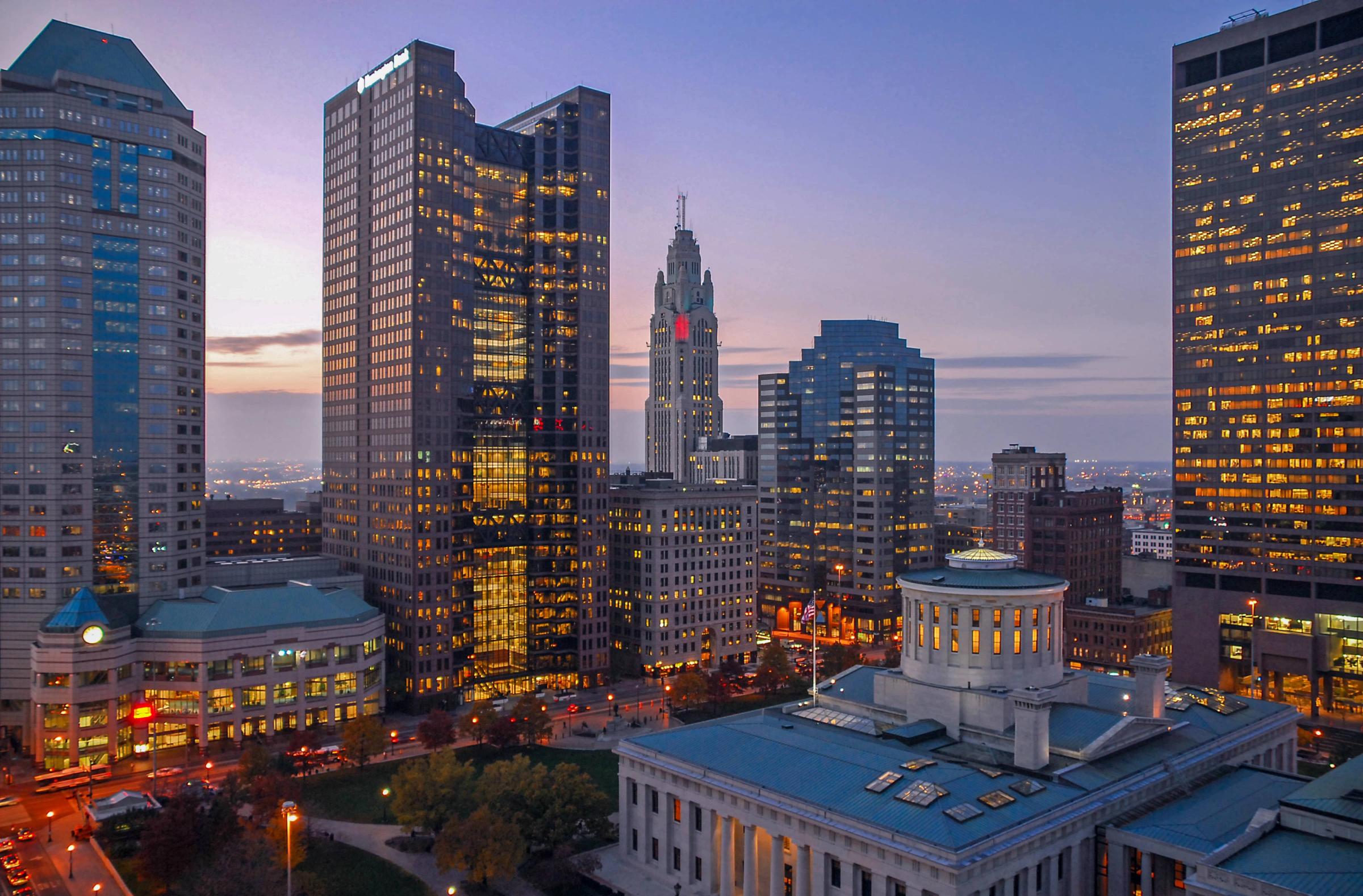
Expert Perspective: What Ohio State’s Moritz College of Law Move Could Mean for Downtown Columbus
Ohio State University’s Moritz College of Law is moving downtown.
Last month, the university announced that it signed a 30-year lease to occupy the Huntington building at 17 S. High St. along Capitol Square. The law school will relocate from Drinko Hall on Ohio State’s main campus, bringing approximately 500 students and 100 faculty and staff to the heart of Downtown Columbus beginning in fall 2029.
The move will place the Moritz College of Law within walking distance of the Ohio Statehouse and Supreme Court, U.S. District and Bankruptcy courts, law firms and government offices, giving students greater access to internships, employers and the broader legal community.
The 194,000-square-foot building will undergo an extensive renovation beginning next spring, with plans for classrooms, faculty offices, a four-floor law library, study and event spaces and a first-floor legal clinic. Ohio State’s lease also includes an option to purchase the property.
Beyond the benefits for the law school, the move represents a significant investment in Downtown Columbus and will introduce a new daily population of students, faculty and staff to the city’s core.
We spoke with NAI Ohio Equities Senior Vice President Philip Bird about what Ohio State’s move could mean, from the impact of bringing more people downtown each day to what it could signal for future investment and development.
What does OSU’s decision to move the Moritz College of Law signal about the direction of Downtown Columbus and its future as more than a traditional office district?
Philip Bird: It signals that the future of Downtown will continue to evolve as a mixed-use district with a combination of institutions, government, residents, and entertainment – in addition to corporate office. While office remains a key component, much of its future growth will be tied to uses/activities outside of business hours.
At a time when Downtown office buildings are being reconsidered for new uses, what does this announcement tell us about the potential for large institutional users to help reposition or reactivate existing properties?
Philip Bird: While office to residential conversions have been a hot topic, not all distressed buildings are candidates for multifamily conversions (most of them are not whether due to cost or infrastructure). This announcement shows that the best fit for some of these properties may be educational, civic, or even medical uses that may prioritize location over the building’s physical efficiency. I imagine we’ll start to see owners with large blocks of vacancy pitching their properties to universities, healthcare systems, and government agencies.
Could a move like this create secondary demand for office, retail, housing or other uses nearby? If so, where would you expect the greatest impact?
Philip Bird: It certainly could but I think the initial impact will be on the retail and restaurants, and multi-family near Capitol Square. Not only will students bring additional foot traffic to the coffee shops, restaurants, and bars, but many will want to live in apartments nearby. From an office standpoint, I think we could see an uptick in activity from small law practices, non-profits, and advocacy groups interested in the student talent pipeline. The news itself, and eventual activity resulting from the move, also helps the perception of the office market downtown, especially on Capitol Square, that it’s trending in the right direction.
What could a stronger physical presence from Ohio State mean for Downtown, particularly given the university’s enormous economic and institutional presence?
Philip Bird: Ohio State is one of the largest economic engines in the state but most of its footprint is concentrated on campus. Such a significant investment will create further synergies between the university and state government and is a sign to other institutions that Downtown Columbus is viable for long-term investment.
Does this announcement change how you think about the trajectory of Downtown Columbus over the next five to 10 years? What would you watch next?
Philip Bird: While certain pockets of downtown have continued to thrive it does strengthen my view that Downtown Columbus, especially Capitol Square which is transitioning into a stronger mixed-use environment. While there are still some challenges in the office market, especially with large blocks of vacancy in some of the older towers, this type of commitment and investment is real catalyst for change.
A few things to keep an eye on:
- Whether other institutions follow, including other OSU programs
- Activity on street level retail as the move in 2029 approaches
- Office leasing velocity on Capitol Square
Recent Articles
Why Local Representation Matters in a Medtail Search
Neighborhood Snapshot: A Closer Look at Worthington
The Story Behind Our Story