The Story Behind Our Story
Three careers. Five decades. Countless deals, lessons and memories.
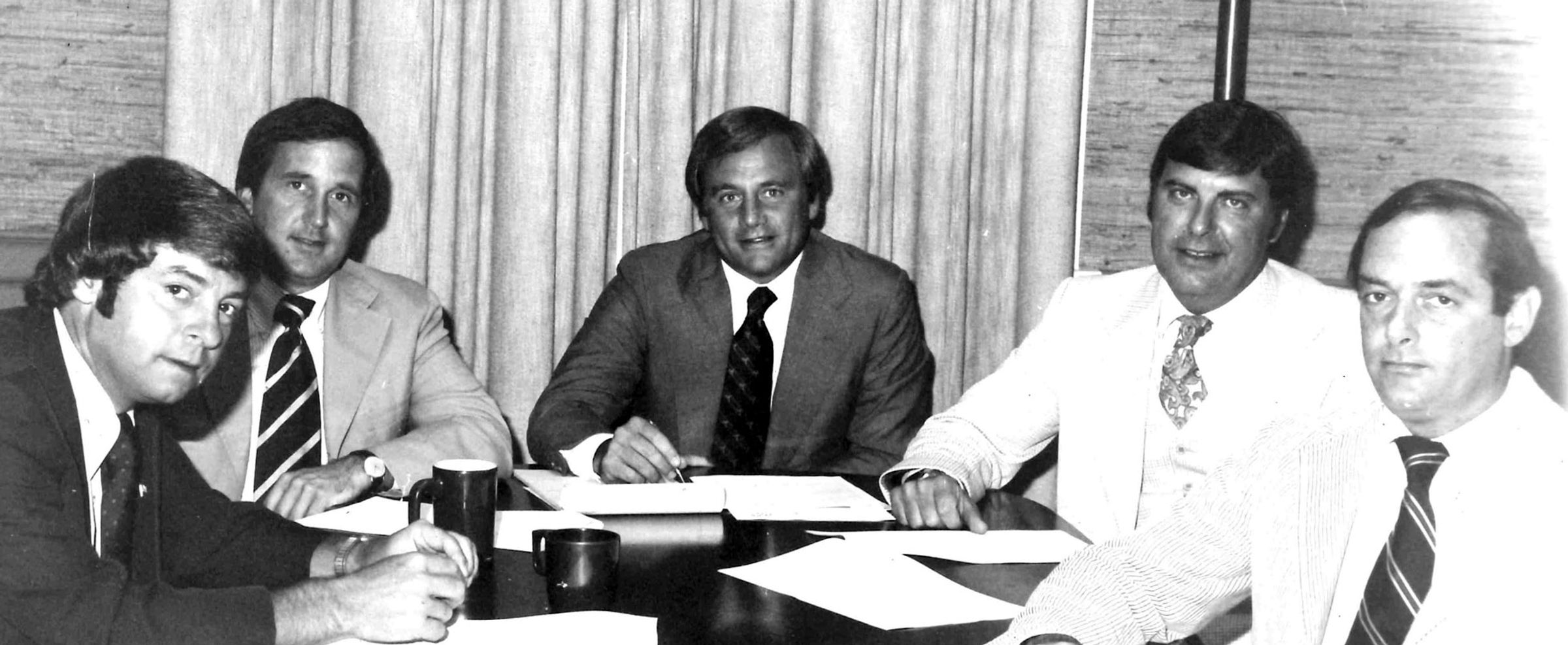
This year marks NAI Ohio Equities' 55th anniversary. Over five and a half decades, hundreds of people have shaped the company, but three have been part of the story since the beginning. Sandy Simpson, Jim Merkel and Dan Sheeran Sr. have watched Ohio Equities, the commercial real estate industry, and Central Ohio itself evolve, and they have left an indelible imprint on all three.
To mark the anniversary, we sat down with each of them to look back on more than a half century of deals, lessons, and relationships.
First, a brief company history.
The roots of NAI Ohio Equities go back to 1967, when the business began as the development arm of The Ohio Company, a large regional investment banking firm owned by the Wolfe family. The Wolfes have long been one of Columbus' most influential families, known best for owning the Columbus Dispatch and other Central Ohio media.
In 1971, George "Sandy" Simpson, alongside the Wolfe family, co-founded Ohio Equities Realtors, a third-party brokerage serving clients of The Ohio Company.
In 1980, the Wolfe family redeveloped the site of what is now the Huntington Center, and tasked Ohio Equities with relocating 72 office and retail tenants to other buildings around downtown. It was a pivotal moment: a massive undertaking that laid the foundation for the growth of both the company and the city.
The 1980s brought expansion into property management, a move that diversified the business and strengthened its reputation across Central Ohio.
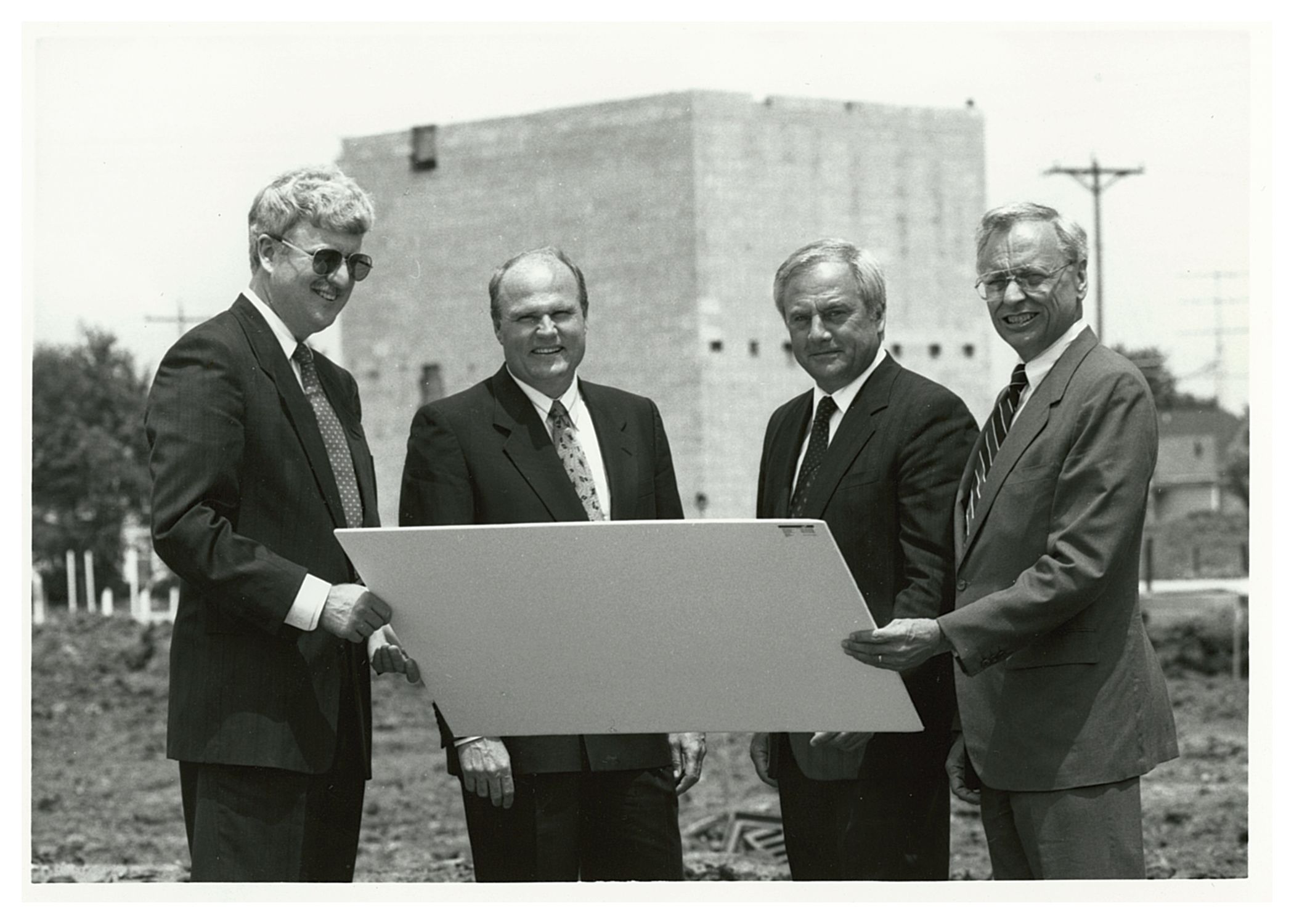
In the mid-1990s, when Mike Simpson joined the firm, he and Sandy, along with other local industry leaders, formed COCIE, the Central Ohio Commercial Information Exchange, bringing the region its first online commercial property database.
In 2003, Ohio Equities differentiated itself with the addition of an in-house marketing and technology department, elevating the firm's brand and online presence. More than two decades later, it still sets Ohio Equities apart.
The milestones tell part of the story, but not all of it. Behind every deal, opportunity, and turning point are the people who made them happen. The history of NAI Ohio Equities is one of resilience, ingenuity, integrity, and lasting relationships, qualities that have defined the company for 55 years and come through clearly in the accounts of those who were there from the start.
The People Behind the Story
Chairman & Founder, George “Sandy” Simpson
When you reflect on the more than five decades you’ve spent building NAI Ohio Equities, what stands out most?
It’s easy, the people. My whole philosophy around business has been centered around people. My relationships with people superseded making money, not because it wasn’t important, but because I knew that money follows when you focus on people. There’s a book by Woody Hayes called You Win with People. I am a Woody Hayes fan, and there’s no question that it’s true.
Was there an ‘a-ha’ moment, when you think back, that you realize that one decision could have changed or did change everything?
Partnering with the Wolfe family. When I graduated from college in 1963, I went into the residential business, but we did some commercial too. I knew I wanted to be in the commercial business. Being from Columbus, I knew J.W. Wolfe, and I knew that he liked real estate. After about five years, I had an opportunity to connect with the Wolfe family. I was 31 years old, when I partnered with the Wolfe family and that partnership gave Ohio Equities credibility.
What’s something about commercial real estate that has fundamentally changed over the years? And what’s something about the business that hasn’t changed at all? And why does that matter?
In my early years, before the big national companies came to Columbus, information sharing was common. We used to take bus tours, have breakfast meetings and share information. I could pick up the phone and call somebody at another commercial office and they’d share everything. I don’t think we do that as much anymore. I viewed information sharing as improving the industry. People don’t look at it that way as much. But one basic thing doesn’t change: the idea that you’re providing a legitimate service for people and the relationships you have. Our business isn’t a widget – we sell relationships.
What has a long and fulfilling life taught you about people?
People want to be treated the same way you’d want to be treated. They like compliments, good feedback, and a warm smile. Remembering that goes such a long way in building relationships. You win by being more accommodating and understanding their position.
What was your favorite deal?
My favorite deal wasn’t a single transaction—it was the chain of opportunities and relationships that grew from one deal over decades.
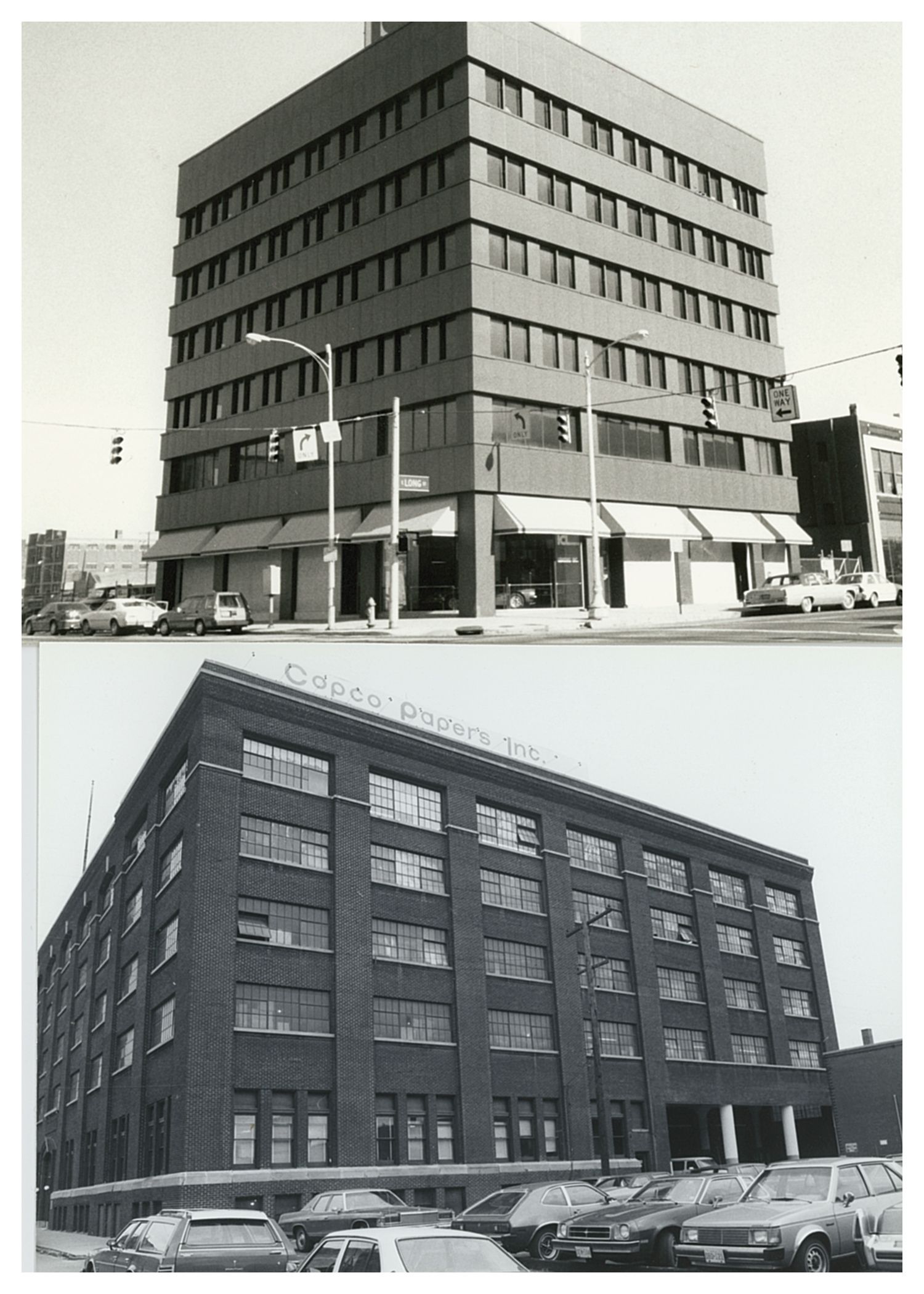
It all started when one of our original sales associates, John Gunnin, who helped Copco Paper Company relocate to a new facility. Gunnin then sold approximately 500,000 square feet of industrial and office space to Wolfe Industries, owned by the Wolfe family. Wolfe Industries redeveloped the property into a mixed-use project, and Ohio Equities managed the leasing efforts. Later, represented by Gunnin, Wolfe Industries sold the property to The Pizzuti Companies.
The proceeds from that sale were used to acquire Brooksedge Corporate Center, a major office development in Westerville. Jim Merkel played a key role in leasing and developing the project, and eventually it was sold to Continental Real Estate Companies.
Proceeds from that transaction helped secure property at Bethel Road and I-270, which was owned by R. J. Solove & Associates. From there, additional proceeds were invested into Southwest Industrial Park on Georgesville Road, a 250-acre site acquired from Nationwide Development Company and Oscar Thomas. The property was redeveloped into more than 500,000 square feet of industrial buildings, with Curt Berlin and other sales associates assisting in the development.
A portion of that industrial park was later sold to Wolfe Industries, who redeveloped the site for The Dispatch Printing Company, and with that, the story had come back to where it started—with the Wolfe family.
Years later, Curt Berlin participated in the sale of the Dispatch printing facility, bringing everything full circle.
What makes this my favorite deal is that it perfectly illustrates how our business works. A single transaction created opportunities for countless others, connecting clients, brokers, developers, investors, and properties across multiple decades. What began with one broker helping a client solve a real estate need evolved into a series of transactions that continued creating value for years to come.
Jim Merkel
What was your path into Commercial Real Estate?
I earned my degree in business finance from Miami University before attending Officers Candidate School in Newport, Rhode Island, and serving as a Navy officer for four years during the Vietnam War.
After that, I worked for the State of Ohio Industrial Development Department and eventually ran the East Coast office in New York City under Governor Jim Rhodes. During that time, I also studied at the New York Institute of Finance.
Those experiences exposed me to business development, communication and relationship-building early on. They also taught me discipline and responsibility, which served me well throughout my career.
You’ve witnessed tremendous change in the industry. What stands out most?
The biggest shift was the transition from being a generalist to becoming a specialist. Before the 1980s, most brokers handled everything — office, industrial, retail, apartments, fast food sites — whatever came through the door. Then national firms like CB Richard Ellis began introducing specialization by product type, and eventually the industry followed.
That shift fundamentally changed how brokers built expertise and relationships. Today’s specialists know their sectors incredibly well, but earlier in my career you had to understand virtually every aspect of commercial real estate.
Technology transformed the business, also. The arrival of the internet and cell phones made offices mobile and changed how quickly information could move. Team structures also evolved. Today, many agents begin their careers as interns to get their foot in the door, then develop within teams that allow for greater efficiency, collaboration and mentorship.
The day-to-day work itself was also far more hands-on than it is today. We created our own closing statements, built marketing brochures by hand using maps and overlays, handled mail distribution, and occasionally stayed up all night finalizing closings. To find leads, we would visit the courthouse map room to review buyers and sellers and determine the most recent transfers. There was no automation, instantaneous communication, dedicated marketing teams or transaction coordinators — brokers handled nearly everything themselves.
Despite all the change, what qualities still define a great broker?
Representation and relationships.
The best brokers continue representing clients long after a transaction closes. They understand when a client’s needs are changing and help them adapt before problems arise.
Trust also matters tremendously in this business. One principle I always believed in was respecting other brokers and their listings. If a property was listed, you worked through the listing broker, not around them directly to the owner.
Those relationships mattered because reputation follows you everywhere in this industry.
I’ve always believed that if you approach business selflessly and treat people fairly, it comes back around to you.
Looking back on your career, what accomplishment are you most proud of?
One year stands out where I closed nearly $45 million in transactions, which was significant for that time. A few of those deals still stick with me today because of the complexity and teamwork involved.
We sold The Continent shopping center to California investor Sam Freshman, and we also handled the sale of 11 apartment complexes across Columbus to the Pritzker family out of Chicago. At the time, the Pritzkers were heavily invested in hotels, and today the family is widely recognized through Illinois Governor J.B. Pritzker.
Those deals required an incredible amount of coordination and collaboration, especially working alongside Tom Waggenbrenner and Dan Sheeran. Back then, transactions of that scale demanded constant communication and problem-solving because there weren’t the systems or support structures that exist today.
I am very proud of the deals that we built through relationships and trust. But I am most proud of my long-standing relationship with Sandy.
Was there a project that challenged you in a completely different way?
In the late 1970s, the Wolfe family, who owned The Columbus Dispatch, hired us for a very unique assignment tied to the future Huntington Center development downtown.
We were responsible for relocating or buying out 72 tenants from the Neil House property so the site could be cleared for construction. Some tenants didn’t even have formal leases, so it became as much about people as real estate.
We worked with a $1 million relocation budget and helped tenants secure new spaces while covering moving costs. It required patience, negotiation and empathy because many of those businesses had been there for years.
That assignment taught me that real estate isn’t just buildings and transactions. It affects people’s livelihoods and futures.
What was the most unusual or memorable deal you ever worked on?
One that always makes me smile was an Uno Pizzeria deal on SR-161.
Dan Sheeran had connections at Uno Pizzeria and Grill, which helped open the door, and I represented the buyer in the transaction. After the deal closed, the client sent me an additional $500 check beyond the commission because he appreciated the work so much.
That may not sound like much today, but at the time it meant a great deal because it reflected trust and appreciation.
Dan “Packy” Sheeran
How did you get the nickname “Packy”?
Packy comes from my mom’s maiden name, Packard. My dad started calling me that when I was young, and it just stuck.
What were you doing before real estate?
I started out in the soft drink business. I got my first sales job when I was 22. I sold our car and kept my wife’s old car and purchased a 7-Up delivery truck. I became a distributor, so we bought our load in the morning and turned our money in at night. I did that for about seven years and was promoted to Plant Manager. It was a great opportunity, but I knew there was a limit to how far I could go. Around the same time, I started buying apartments near Ohio State and fixing them up. We were taking doubles and converting them into six-unit buildings, and I found myself enjoying that side of the business more and more.
When it came time to decide what was next, I looked at insurance and real estate. Real estate won because it was tangible. You could actually see what you were working on instead of selling a piece of paper.
What characteristics do you think are most important to be successful in commercial real estate?
The things that matter most are honesty, positivity, persuasiveness, and creativity.
What advice would you give younger agents today?
Never go home the same way twice. If you go home the same way all the time, you’ll never see anything new. You should always be looking for opportunities. You should always be looking for potential deals and potential listings because they’re all around you.
What’s the biggest lesson you’ve learned in your career?
Patience. This business has ups and downs, and if you panic every time something goes wrong, you’re going to drive yourself crazy. You have to keep a positive attitude and understand that not every deal is going to work out.
I’ve always said you need 10 deals in the hopper to make five. That’s just the way it works. It’s a numbers game, but it’s also a life lesson. Keep moving forward, keep working, and trust that things will come together.
You’ve spent 54 years with Ohio Equities. What has kept you here?
A big part of it is that I’ve always loved the business. Even after all these years, I still enjoy coming to work. I honestly can’t remember a time when I didn’t want to come into the office. Early in my career, success was tied to accomplishments, money, and building a lifestyle. Today, what keeps me going is the challenge, the personal reward, and the excitement of the next deal.
The other part is the people. Sandy Simpson created an environment that was different from most companies. He had a real knack for attracting good people and making Ohio Equities a place you wanted to be.
When I look around and see people like Merkel and myself who have spent 50-plus years with the same company, that’s pretty unusual. I think it speaks to the culture Sandy built and the kind of people he brought together. I’ve stayed because I love the business, I’ve always enjoyed the people, and Ohio Equities has simply been a great place to spend a career.
The Next Chapter
President, Michael Simpson
After reading these interviews, what stood out to you most?
The emphasis on relationships. It comes up in almost every story, and I think that’s because relationships are where the fulfillment in this business comes from.
We do our best work with people we know, trust, and enjoy working with, and I think our clients feel the same way about us. That’s always been my favorite part of commercial real estate.
Though I don’t do as many real estate transactions these days, I am working on a brokerage deal and it’s been reinvigorating to connect with brokers and has reminded me how collaborative this industry is. We all want the same thing: to help our clients succeed. When you focus on making someone else’s job easier, they usually do the same for you.
Honestly, it’s reinvigorated me and reminded me why I got into the business in the first place.
What do you think has allowed NAI Ohio Equities to remain successful across multiple generations?
We’ve never been willing to stand still.
One of the biggest lessons I’ve learned is that you can’t simply react to change. If you want to continue growing and improving, you have to pursue it.
The companies that last aren’t the ones that preserve everything exactly as it was. They’re the ones that continue evolving while staying true to who they are.
You grew up around this company. What’s something you learned from your dad that continues to influence your leadership today?
Our people come first.
I learned early on that our employees are our most important asset. Buildings, listings, and transactions matter, but none of them happen without great people behind them.
One of the things I’ve always admired about my dad is how much he genuinely cared about the people around him. He listened. He supported people. He wanted them to succeed.
I’ve tried to carry that forward in my own leadership. If we’re going to be successful as a company, we have to invest in our people, understand what they need, and create an environment where they can do their best work.
What responsibility do you feel as the next generation of leadership?
For the first 25 years of my career, I was focused on serving clients and building my own business. I was commission-based and, in many ways, responsible for one family: my own.
Today, that responsibility looks very different.
When I come to work, I think about the more than 130 families that depend on this company. That’s a much broader responsibility, but it’s also far more fulfilling.
Over the last few years, I’ve also gained a greater appreciation for collaboration. For most of my career, I wasn’t part of a team in the way I am today. Leading an organization has shown me how much can be accomplished when people work together toward something bigger than themselves.
How do you honor the company’s history while continuing to evolve for the future?
By remembering that the fundamentals never change.
Relationships matter. Hard work matters.
Those principles helped build this company 55 years ago, and they’re still just as relevant today.
The challenge isn’t preserving the company exactly as it was. It’s carrying those values forward while continuing to evolve and improve. The future will look different than the past, and it should. But if we stay grounded in the values that got us here, we’ll be well-positioned for whatever comes next.
What legacy do you hope to leave behind?
I hope people would say that I put the interests of the company and our employees ahead of my own.
Titles, transactions, and accomplishments eventually fade. The impact you have on people lasts much longer.
If our employees felt respected, supported, and knew that I always had their best interests at heart, that would mean more to me than any professional achievement.
Recent Articles
Expert Perspective: What Ohio State’s Moritz College of Law Move Could Mean for Downtown Columbus
Why Local Representation Matters in a Medtail Search
Neighborhood Snapshot: A Closer Look at Worthington