Issue 28: Community Protection or Cautionary Tale?
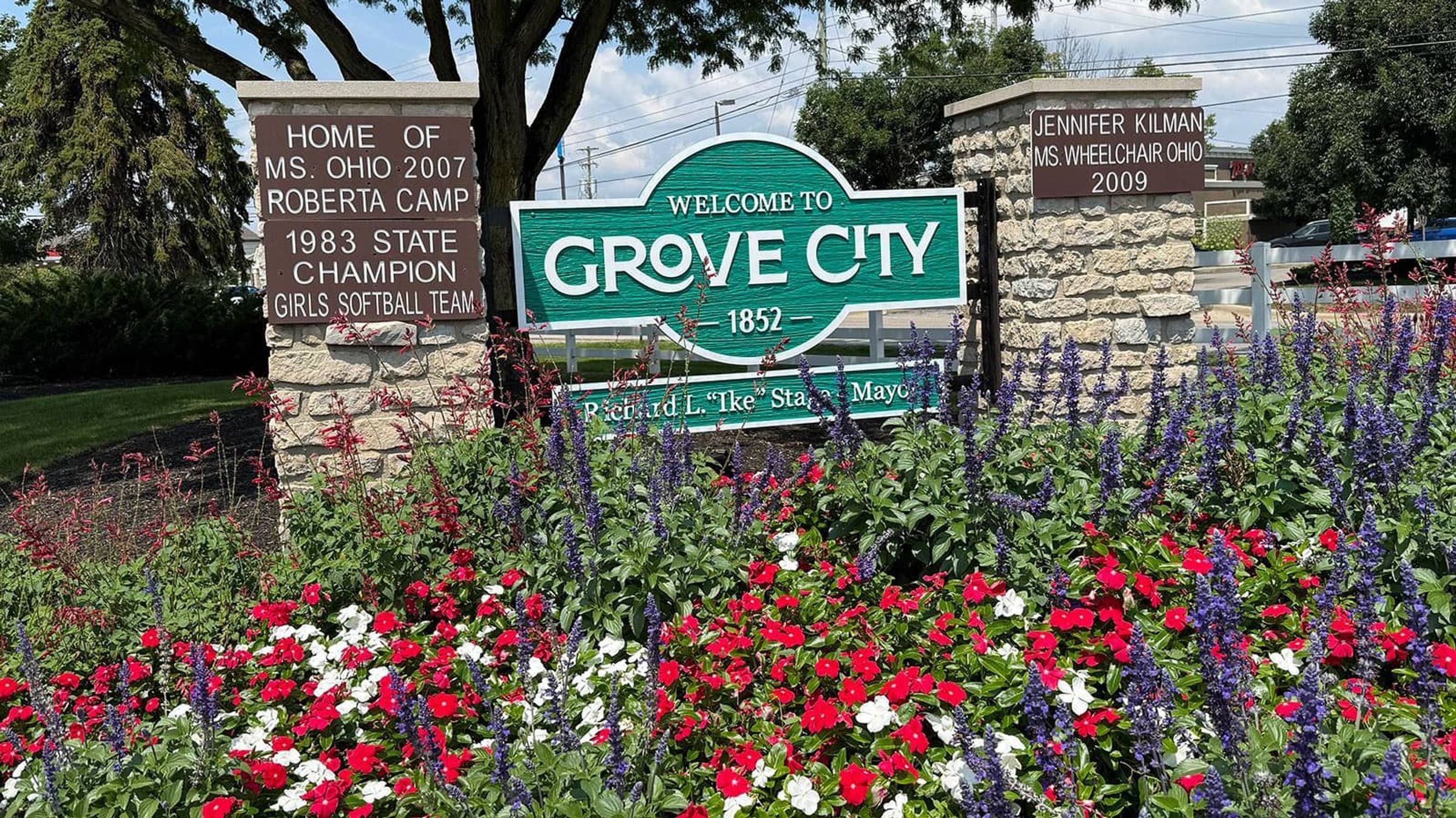
Across Central Ohio, proposed developments are increasingly prompting debate over appropriate land use, infrastructure demands and their impact on surrounding communities.
In Grove City, a proposed charter amendment illustrates how those concerns could reshape the approval process, affecting a much broader range of projects.
Known as Issue 28, the Community Consent Amendment emerged following opposition to a proposed 300-acre data center campus. Brought forward by a community organization opposed to the development, the amendment was approved for placement on the November 3 general election ballot.
Although prompted by concerns specifically pertaining to data centers, the proposed amendment could have broad and adverse effects on all development in Grove City if approved.
Restrictions on Private Property Rights
At its core, the amendment raises questions about private property rights and the extent to which landowners should have control over the future use of their property.
Rather than relying solely on established zoning, planning and approval procedures, qualifying developments would also require voter approval. Because the amendment's thresholds are based on acreage and utility consumption rather than specific land uses, the requirements could apply to a broad range of projects and property transfers.
Specifically, the proposed referendum requirements would apply to developments occupying 50 or more contiguous acres, requiring more than 20 megawatts of electricity at peak capacity or consuming more than 500,000 gallons of water per day.
For property owners, the implications extend beyond development approvals, potentially affecting their ability to sell, repurpose or invest in their land.
The Cost of a Longer Development Process
The proposed amendment would also significantly extend the time required to move new development projects forward.
According to a page dedicated to Issue 28 on the Grove City website, a typical project moves through the review and approval process in approximately two to four months. Under the proposed amendment, qualifying developments would be required to undergo additional reviews, including an independent community impact study, administrative approvals and a public referendum before proceeding through the standard development process.
The city estimates these requirements could add nine to 18 months to project timelines, introducing additional costs and uncertainty for developers, which could be detrimental to the attraction of new investment.
“Developers invest significant time and money evaluating a site before a project ever moves forward, from engineering and legal fees to planning and due diligence,” explained Chad Boggs, Senior Associate at NAI Ohio Equities.
Much of that investment is made before a project receives approval, with no guarantee those costs will be recovered, increasing the risk of financial exposure.
“Interest rates, construction costs and market conditions can all change during that time, potentially making a project that was once financially feasible no longer viable,” Boggs said. “When developers have other communities to consider, that level of uncertainty could take Grove City off the list before the process even begins.”
Expansion and Reinvestment Could Become More Complicated for Businesses
Beyond potentially discouraging new development, the proposed amendment could also create significant challenges for businesses already operating in Grove City.
Existing businesses meeting the amendment's acreage or utility thresholds could obtain grandfathered status by registering their current operations with the city. However, that designation would only exempt their existing operations from the referendum requirement. Businesses would still be subject to quarterly reporting, Community Impact Standards and financial penalties for violations.
Penalties for violating a Baseline Threshold or Community Impact Standard would begin at $25,000 per day for the first week of a violation and increase incrementally until reaching $500,000 per day beyond 90 days. Under the amendment's penalty schedule, cumulative fines could total $17.9 million after 95 days of continuous violation, says the city’s website.
The amendment would also impose additional requirements on certain property expansions, changes in primary use and transfers of ownership or operational control. These provisions could complicate commercial real estate transactions and discourage reinvestment by introducing additional costs and uncertainty for property owners, prospective buyers and existing businesses.
“Businesses have choices about where they locate and invest, and they're going to choose communities where these requirements don't exist,” Boggs said. “When compliance expectations are unclear and the penalties are so severe, it discourages businesses from even considering expansion. The unintended consequence is that a measure intended to address one type of development could end up driving economic investment away from Grove City.”
Broad Requirements Raise Questions
Beyond the potential costs and delays associated with development, the amendment raises questions about how its requirements would be interpreted and enforced.
The proposed Community Impact Standards establish limits on noise, lighting, vibration and infrasound for qualifying properties.
The amendment specifies a maximum daytime noise level of 55 dB(A) at the nearest residential property line, a level the city compares to the sound of a household refrigerator, according to its website.
A legal analysis prepared for the city questions the basis for these standards and raises concerns about their broad application, inconsistent enforcement provisions and potential legal challenges.
Further complicating matters, City Council would have limited authority to modify the requirements if they prove unreasonable or difficult to enforce, creating additional uncertainty.
The implications could extend to everyday community activities.
According to the city's website, Murfin Fields, a youth sports complex occupying approximately 51 acres, exceeds the proposed acreage threshold. Depending on how the standards are interpreted and enforced, activities such as youth soccer matches could raise compliance questions related to noise or lighting, potentially exposing the facility to substantial financial penalties.
Implications for Schools and Community Facilities
The amendment's requirements could also extend beyond commercial development to schools, hospitals, parks and other community-serving facilities.
Because the proposed thresholds apply regardless of property use, a new school occupying 50 or more acres could be subject to the same additional review and referendum process as a qualifying industrial development.
These requirements could add time and expense to school construction projects, potentially affecting budgets, financing and schedules for facilities intended to serve a growing community.
Existing facilities meeting the thresholds could also face ongoing reporting and compliance requirements, exposing them to potential financial penalties for violations.
As a result, the amendment could create additional costs and uncertainty not only for private investment, but also for the development and operation of essential community facilities.
A Broader Challenge
The debate surrounding Issue 28 reflects a broader challenge, one that extends beyond Grove City.
As communities throughout Central Ohio and across the state navigate similar questions about land use and development, Grove City's proposed amendment illustrates the risks of applying broad restrictions.
Concerns about the amendment's potential consequences have prompted opposition from Grove City Council, Jackson Township, the Grove City Chamber of Commerce, the Ohio Chamber of Commerce and Columbus REALTORS®.
“Communities deserve open conversations about growth, transparency and sensible zoning,” said 2026 Columbus REALTORS® President Gloria Alonso Cannon. “Good planning is one thing. Forcing property owners to win an election to use their own property is another.”
The question moving forward will be how to address citizen concerns while ensuring that those efforts do not create unintended barriers for property owners, businesses and public institutions seeking to invest in their communities.
For additional information about Issue 28, including the proposed charter language and the city's analysis, we encourage you to visit the Grove City website.
Recent Articles

Expert Perspective: What Ohio State’s Moritz College of Law Move Could Mean for Downtown Columbus
Why Local Representation Matters in a Medtail Search
Neighborhood Snapshot: A Closer Look at Worthington